St. Patrick’s Well – Clonmel’s Hidden Gem of History, Nature & Peace
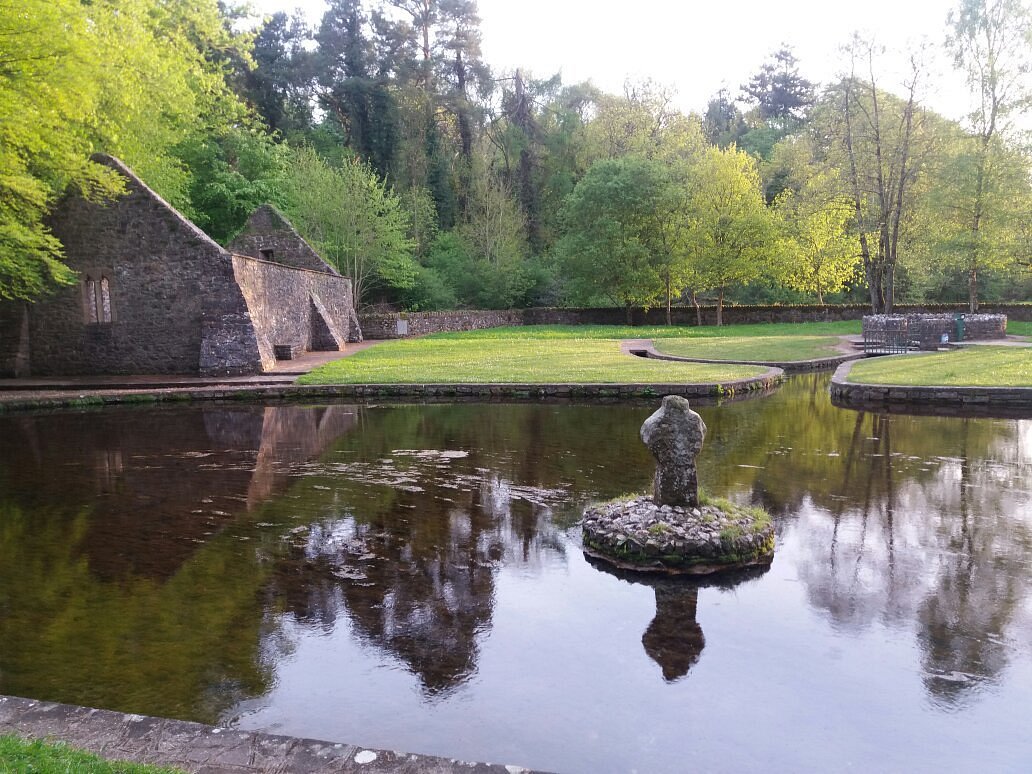
St Patrick’s Well is one of the most significant historical sites in Clonmel, County Tipperary. It is also one of the largest holy wells in Ireland. According to a legend, St Patrick stopped here to bathe and to baptise local people during his travels.
Association With St Patrick
Holy wells in Ireland typically developed around natural springs and were often places of pre-Christian ritual activity before being incorporated into Christian worship. St Patrick’s Well fits this pattern: the spring, the water basin, and the early medieval cross all indicate a long tradition of pilgrimage.
The site is mentioned in the 10th-century Life of St Declan, confirming its importance more than 1,000 years ago.
Local tradition states that St Patrick stopped here to bathe and to baptise people while travelling through Munster. Another legend claims St Patrick met St Declan here to settle a disagreement about jurisdiction.
The spring rises within a circular stone enclosure.
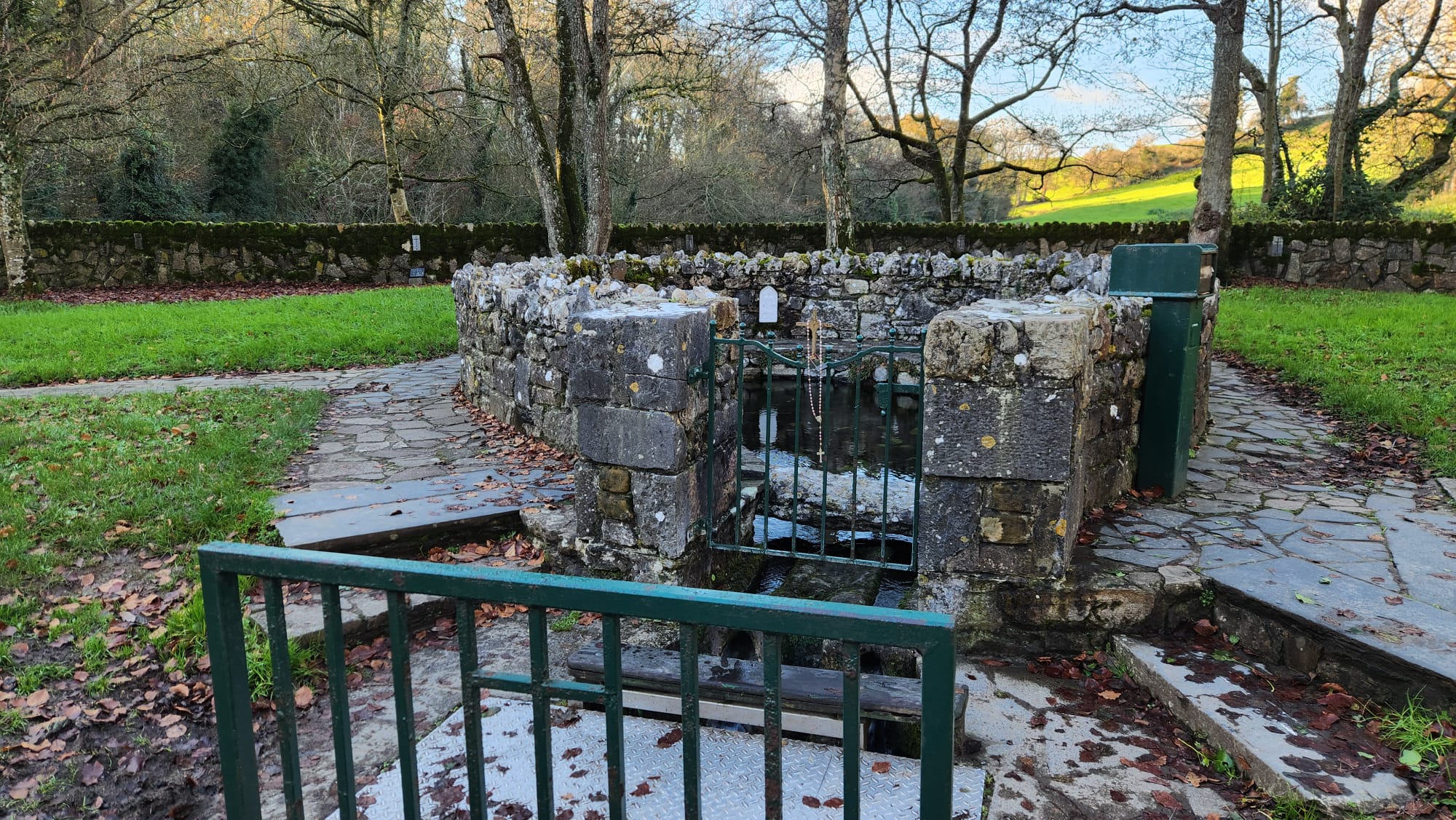
The water flows out through two long, hollowed-out granite spouts. Archaeological analysis suggests these stones are reused flumes from an early medieval horizontal watermill, making them significant artefacts in their own right.
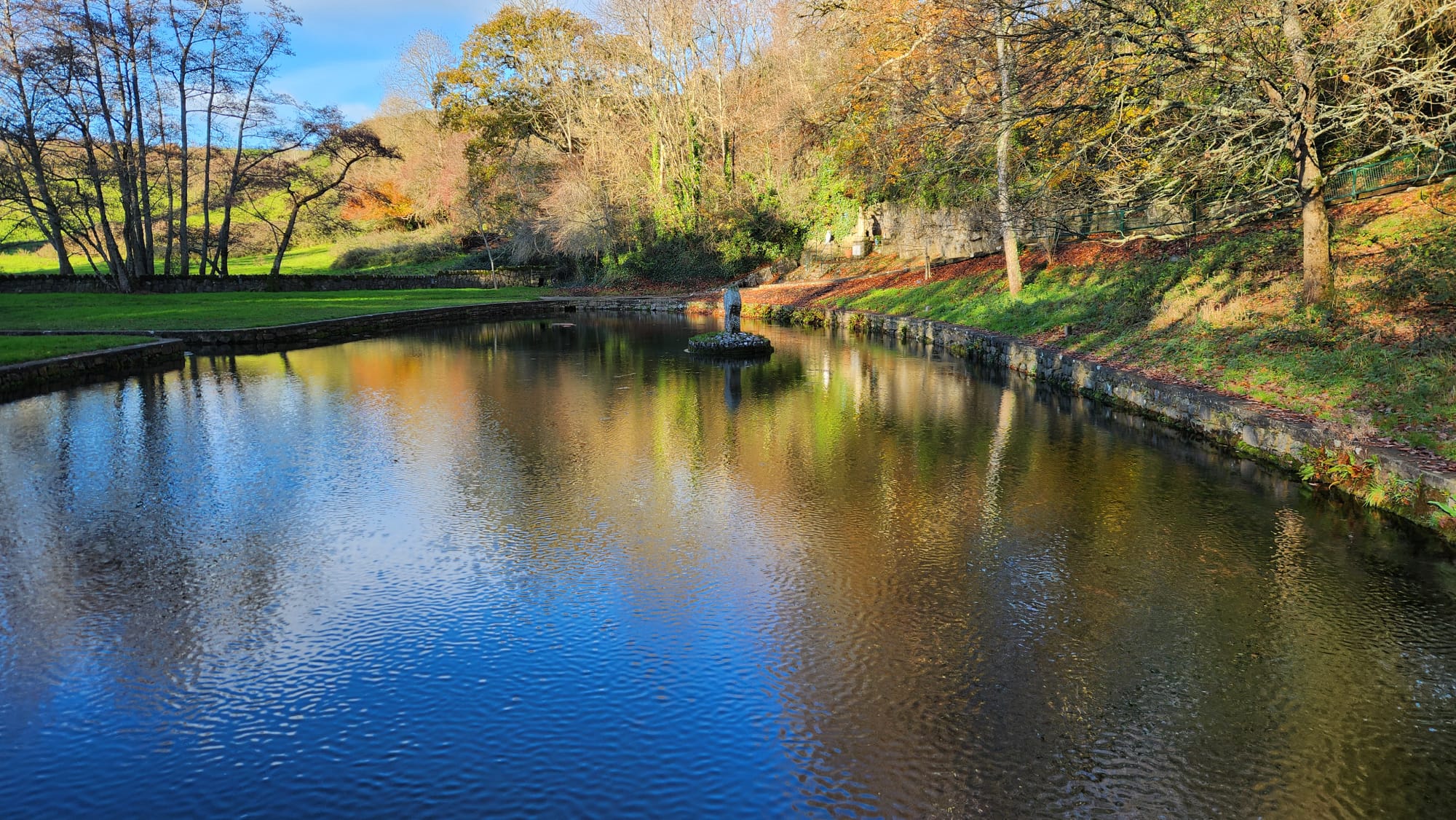
The spring empties into a large shallow pool, then drains into a narrow stream that feeds into the River Suir, located directly south of the site. Local tradition maintains that the water never freezes, likely due to the constant temperature of the spring.
The Early Medieval Stone Cross and the Church Ruin
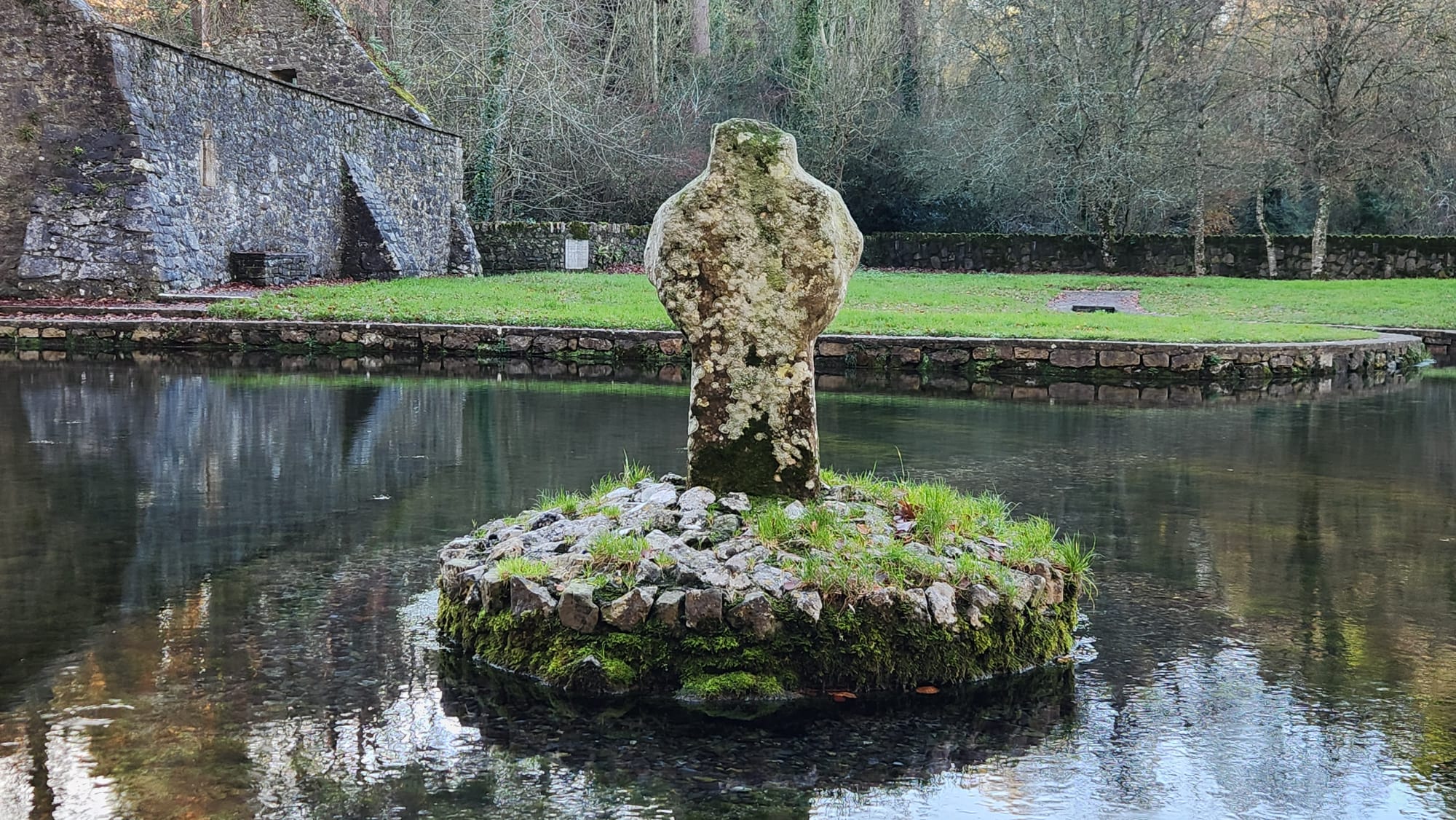
At the centre of the pool stands a simple, undecorated stone cross, likely dating to the 8th century or earlier.
It is carved from a single block and represents one of the oldest visible Christian monuments on the site.
Originally positioned near the church on marshy ground, the cross was moved onto the small island during a major restoration in the 1960s.
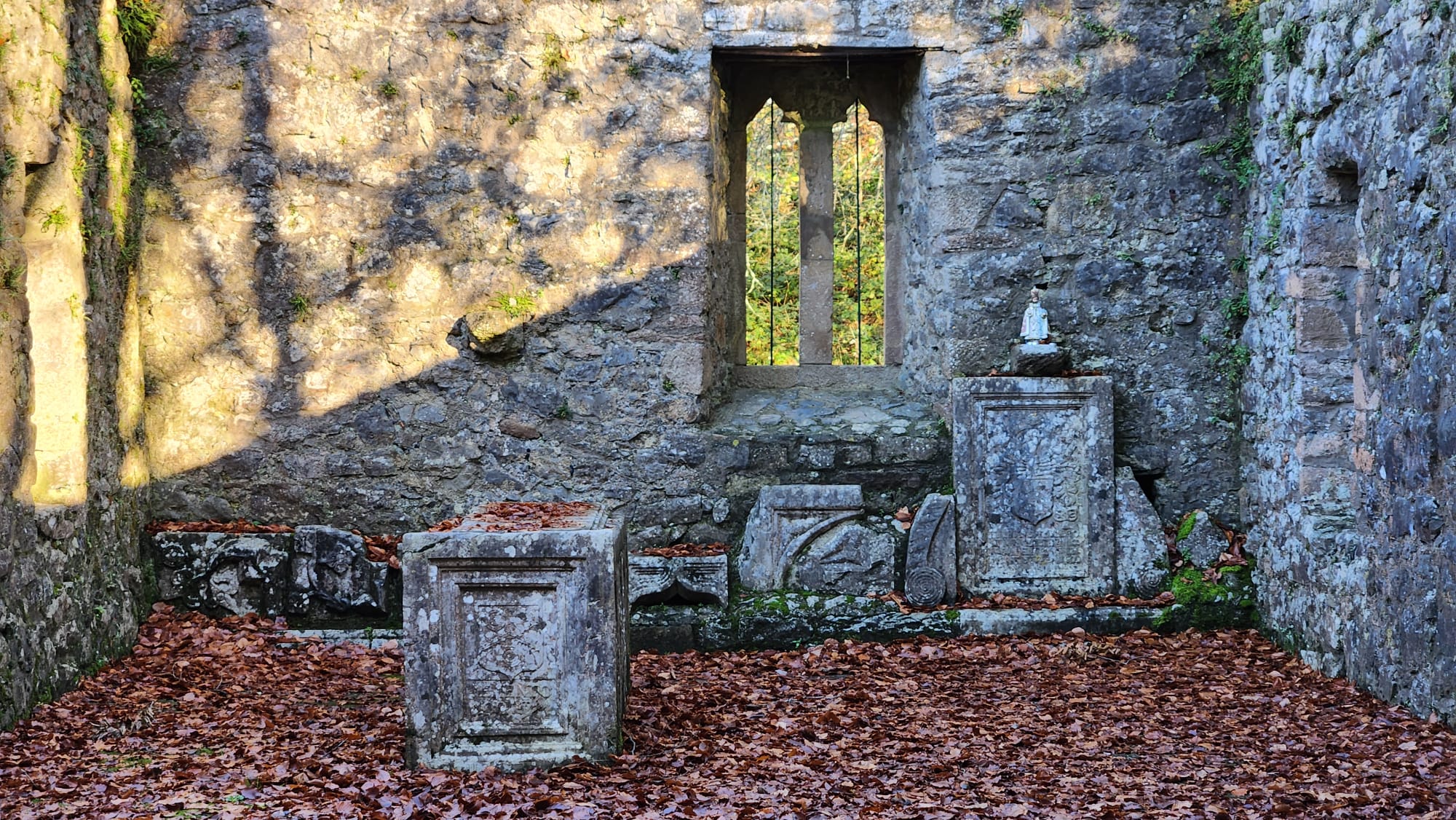
The roofless stone church is usually dated to the 15th or 16th century, although some architectural fragments suggest an earlier structure once stood here.
Key features include:
Romanesque sandstone fragments with chevron carvings
A late medieval altar tomb (1622) belonging to the White family
Window heads and carved stone fragments believed to have been brought from Inislounaght Abbey, the nearby 12th-century Cistercian monastery
The burial of Nicholas Fagan, Abbot of Inislounaght, recorded in 1617
The church may have served as a parish church and later as a Church of Ireland place of worship into the 18th century.
Cures and Pilgrimage Traditions
Like many holy wells in Ireland, St Patrick’s Well is associated with curative properties, especially for:
sore eyes
sore lips
headaches
chronic illnesses
Stories preserved in the National Folklore Collection describe:
a crippled boy restored to health
people regaining their sight
a man cursed to bark like a dog after mocking pilgrims
The belief that the water never freezes contributes to its long-standing reputation for healing.
Pilgrimage to the site is recorded as early as 1619, when Pope Paul V granted a plenary indulgence to pilgrims who visited the church on Pentecost or St Patrick’s Day.
Details
St Patrick’s Well is one of the most distinctive heritage locations in County Tipperary.
Its importance comes from a combination of:
a large natural spring
an early medieval cross
a later medieval church
strong folklore and healing traditions
continuous use for over a millennium
Visitors today see a well-preserved site that blends early Christian archaeology with 20th-century restoration and long-standing local care.
For anyone travelling through Clonmel, Marlfield, or the Suir Valley, this site is one of the most worthwhile and informative stops in the region.
Articles
Discover Ireland
Explore our articles to make the most of your visit to Ireland